2050? rabbits gone? bandicoots back?
The following is taken from an evening presentation of research in March 2026 with respect to rabbits, current invasive occupants of the Bellarine, and bandicoots, representative of the indigenous fauna of the past.
The work was supported by a City of Greater Geelong grant.
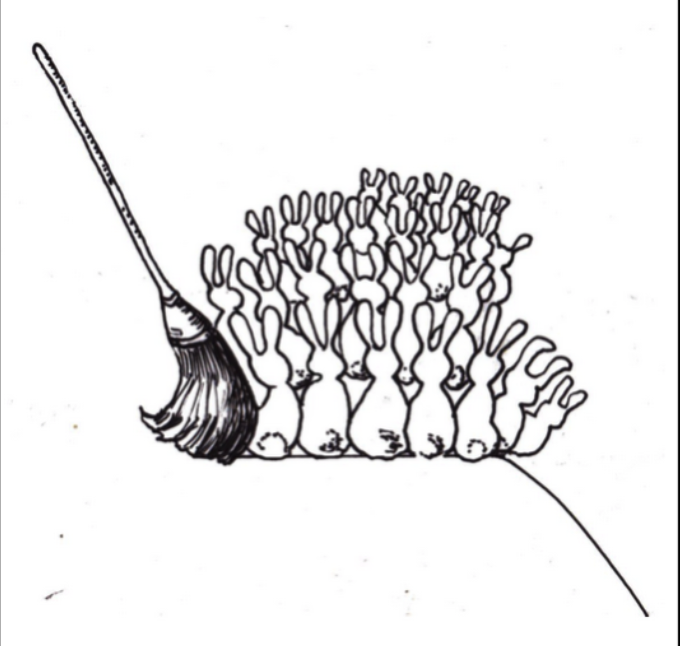
Tonight, we think we are a mixed bunch - some of us know very little about rabbits and some of us are the country's top experts. Few of us claim to know enough about our indigenous wildlife. We are keen to focus on them tonight. We would like their recovery to be the motivation for taking the Bellarine back from the rabbits.
We are going to try to imagine the future. We are not here to debate climate change, or any other political agenda, but to learn more about the rabbits we have and the indigenous animals we might like to have in 2050.
CoGG have given us support for tonight’s event. So the first question for us is what do we know about rabbits and then what about the ‘missing friends’?
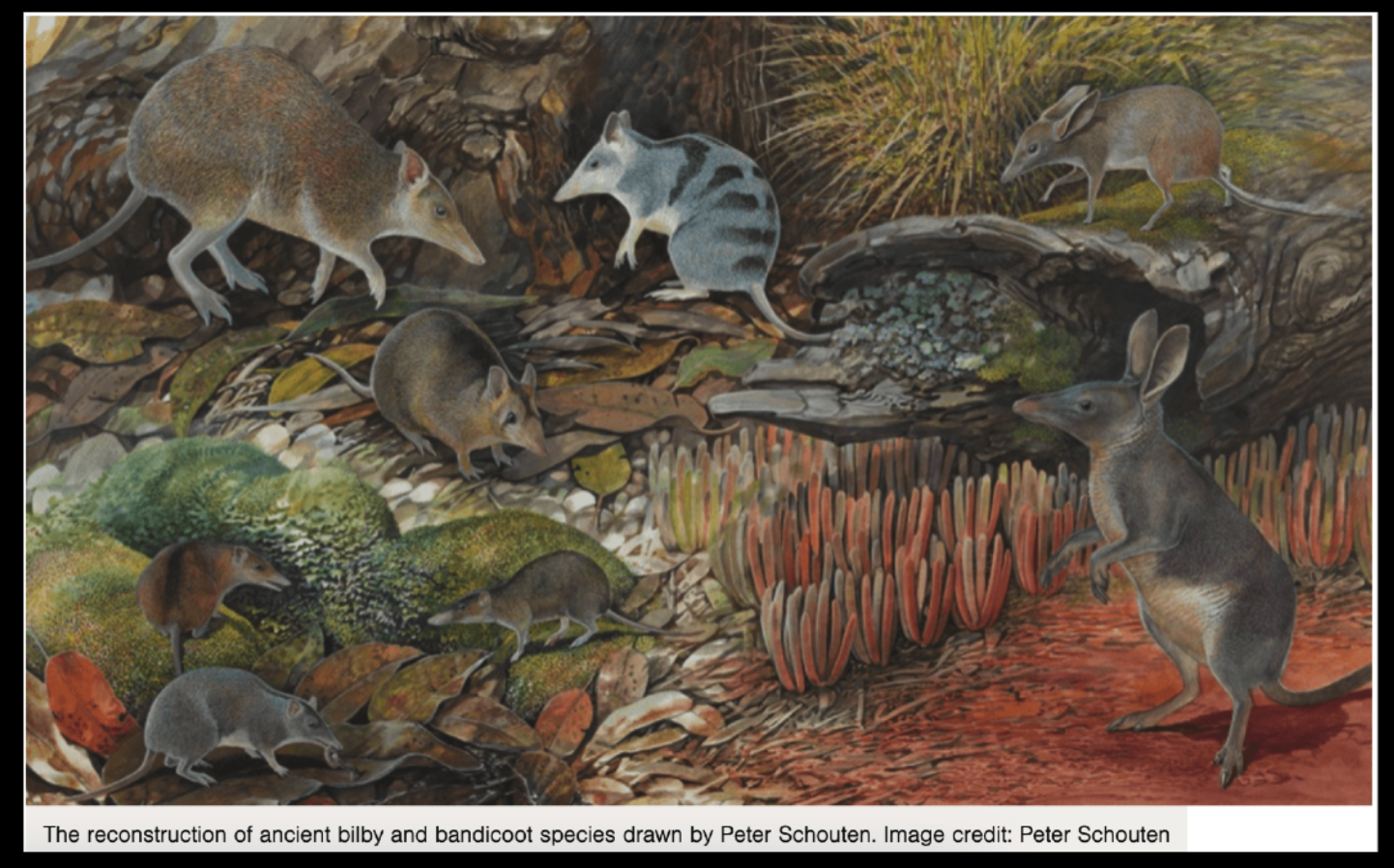
For the pre-history of animals potentially on the Peninsula, there is a wonderful article about the work of Kenny Travouillon, erstwhiole curator of mammology at the Western Australian Museum.
Tonight, we are talking about European rabbits in Australia. It might interest you to know that rabbits did not just come by boat and start taking over the countryside.
From https://www.youtube.com/embed/A5j8y4zmWpo&list=PLZDs6rNxLTnWlOtMtMs-QmUSluGXaTPrKR7&index=4
Joel Alves from Oxford Uni (UK) spoke in 2022 about the history of rabbits in Australia researched using genetic techniques. He said there were two sub-species native to Iberian peninsula and some now here came directly from Spain and others from their adopted home in the UK. Interestingly though, although the spread took place at incredible speed, getting started was not quite so easy.
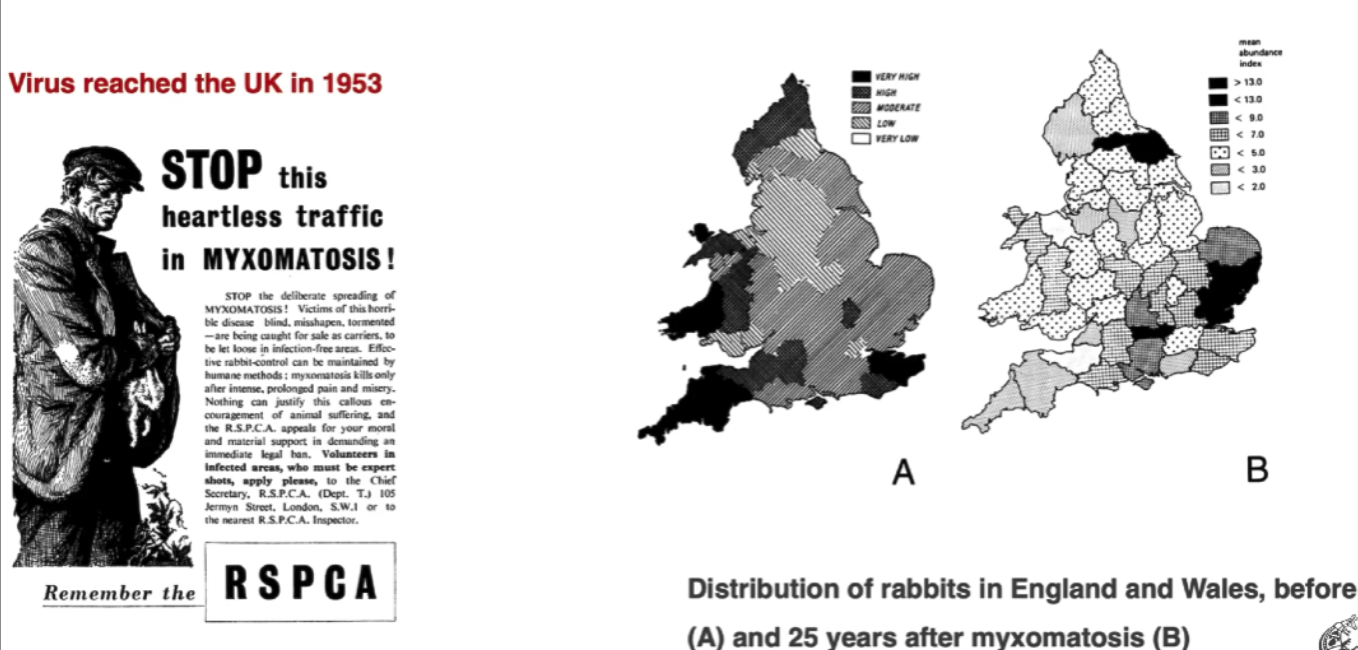
He was also interested in how and why they had survived the myxomatosis epidemic.
But now let's remember some of the original inhabitants of the Bellarine
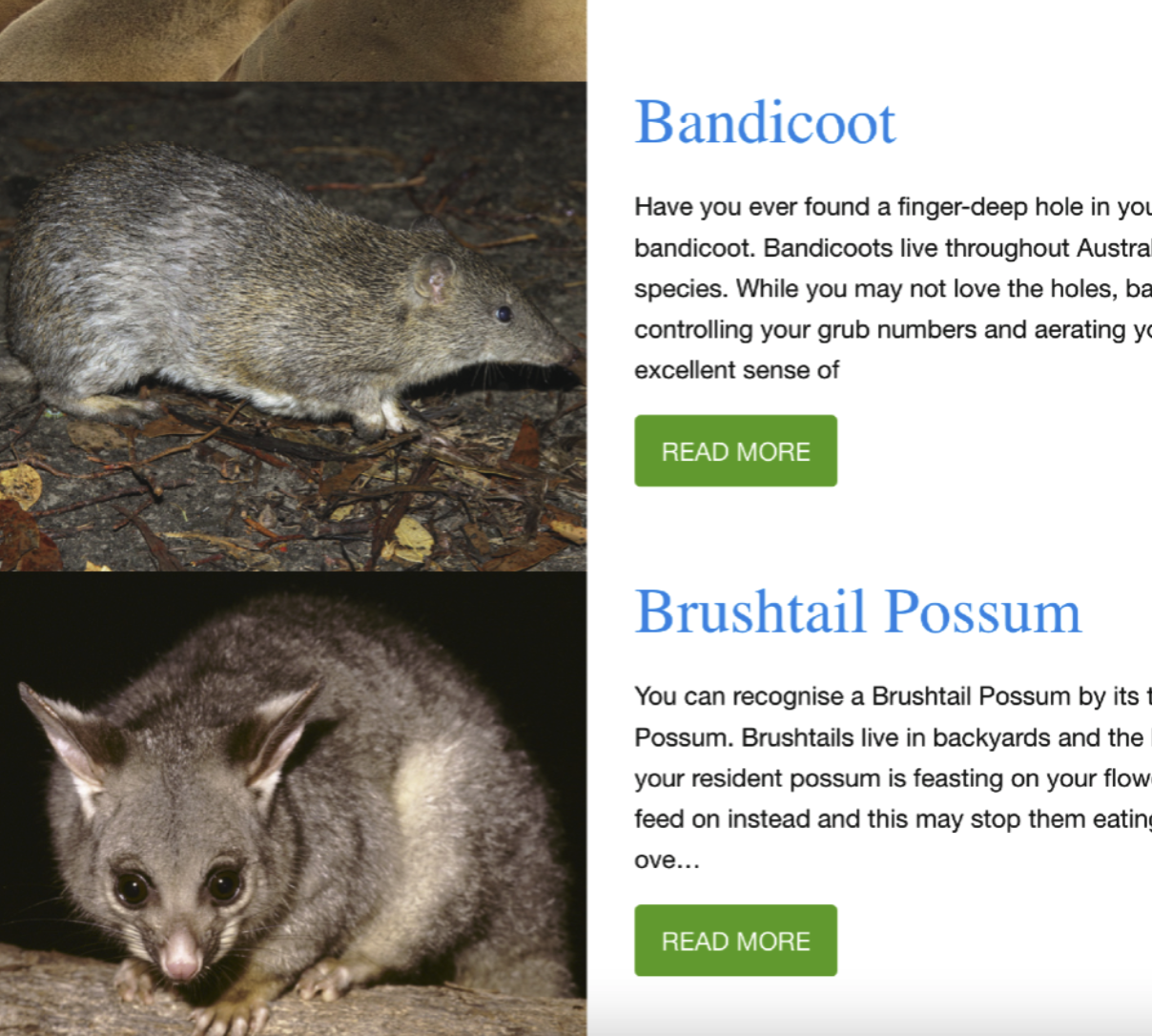
We have chosen to start with bandicoots because we have research to help us about them. In South Australia they have Haigh’s chocolate bilbies - we are hoping to one day have real and chocolate bandicoots!
See https://backyardbuddies.org.au/explore/mammals/
In case you don’t know it, iNaturalist gathers information from citizen scientists on their phones and is amazing!
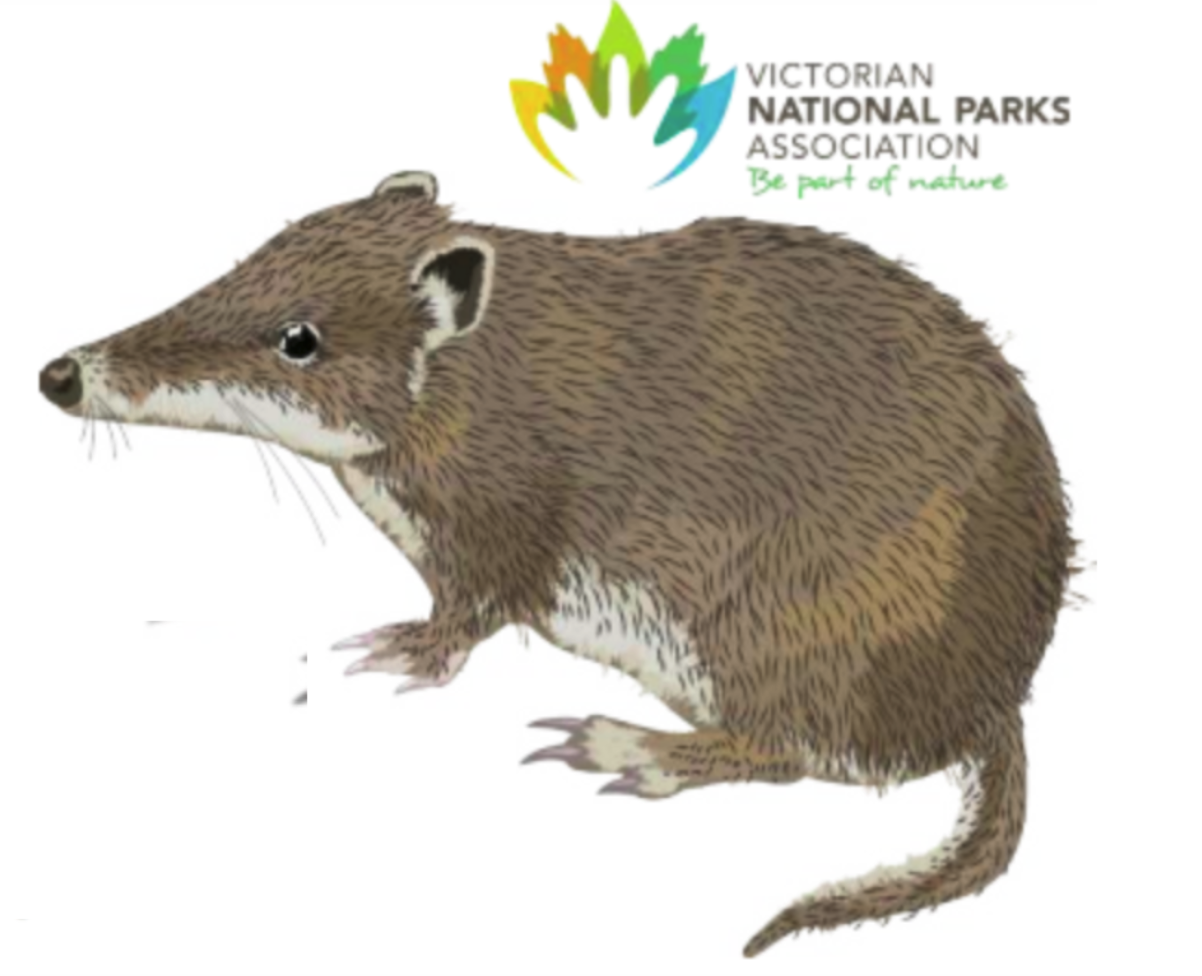
They have documented three types of native bandicoots in Victoria:
- Southern Brown Bandicoots with Small rounded ears, consistent marled brown fur on the body and a creamy-white underbelly
- Long-nosed Bandicoots with Sandy/grey-brown fur with light banding on the rump, long nose
- Eastern Barred Bandicoots with Distinctive lighter banding on the rump. Extinct in the wild until recent releases from a captive breeding program.
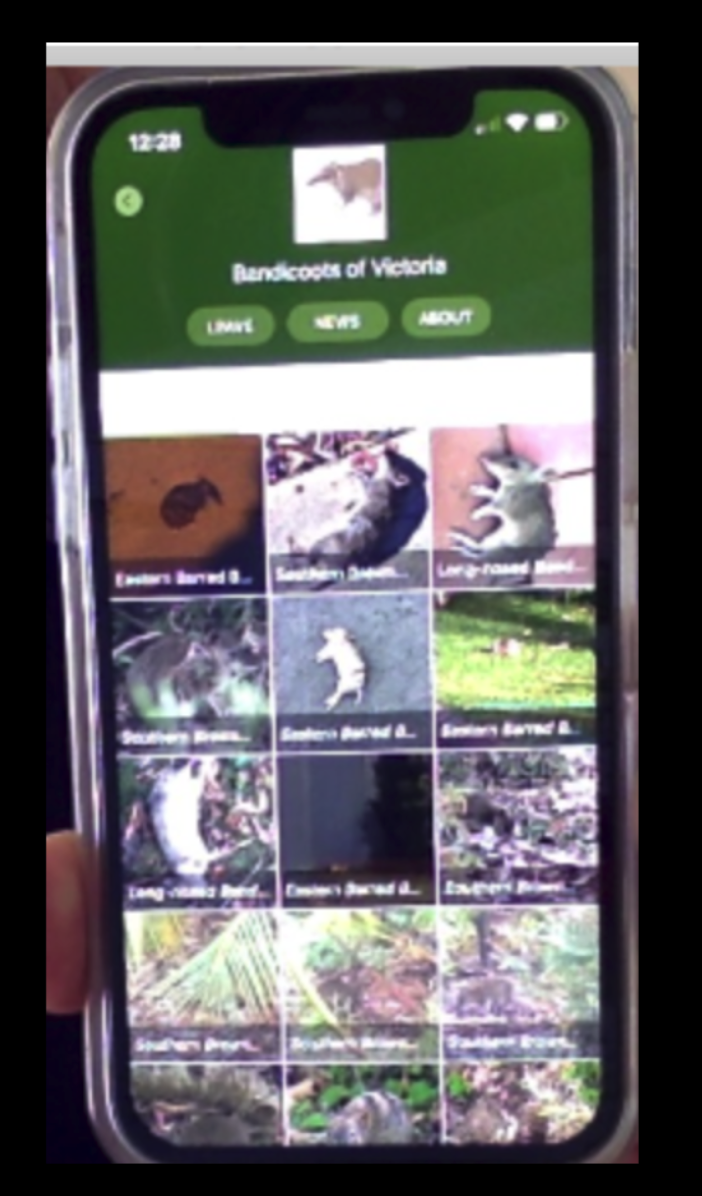
See https://www.inaturalist.org/
Lots of us have commented about the incredible number of rabbits this year but how do we understand the numbers?
Some of you may remember a campaign for zero population growth? ZPG is a demographic balance where the total population remains the same. For people, that is when the number of births plus incoming migrants is equal to the number of deaths plus outgoing migrants. For us, that is about 2 1/2 children for each human female. Then, the growing family does not grow the population.
What are the relevant factors for rabbits?
Clearly, it all depends on birth rates but the alarm bells are ringing - current rabbit numbers suggest rabbit families can deliver 180 kittens per female in just 18 months, 90 of the kittens each deliver 180 in the next 18 months, … spectacular overall population growth!
See https://en.wikipedia.org/wiki/Zero_population_growth
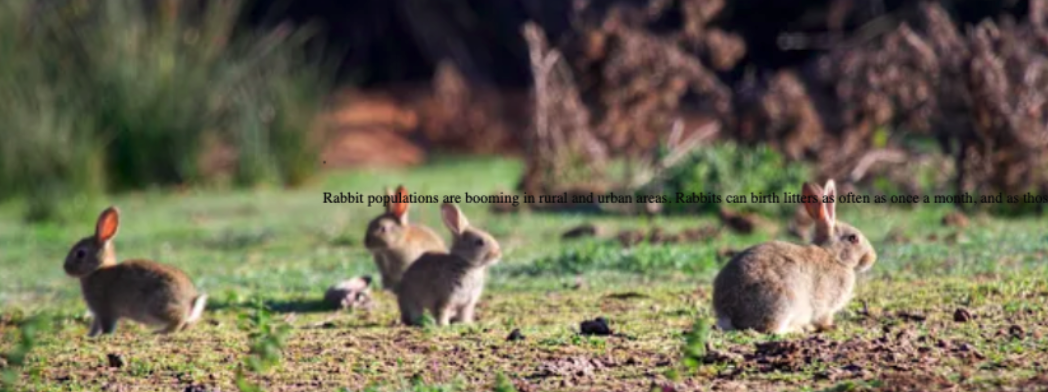
Ag Vic tells us:
rabbits need protein-rich, fresh growth to successfully reproduce so most breeding in Victoria starts in autumn and continues until vegetation dries off in early summer.
Rabbits can start breeding at 3 to 4 months, gestation is 28 to 30 days, and they often have 4 - 6 kittens per litter. Kittens are born blind, deaf and almost naked in either short nesting burrows or above-ground nests. Mating can recur immediately after giving birth.
In fact, Mike Foley wrote in the SMH in 2025: they can birth litters as often as once a month, and “trigger the kind of exponential growth that creates populations so vast and widespread that experts warn devastating ecological damage is inevitable.”
He added:
“The federal government has calculated rabbits cause about $250 million in lost agricultural production a year." There are other significant costs. We ask, what do they cost the environment ands can it be quantified?
We are concerned particularly about the real cost and the inevitability…
Generally, cat and fox populations increase when rabbit populations increase:
- Rabbits as a key food for foxes and feral cats sustain high predator populations.
- Abundant rabbit populations help cats and foxes breed to maximum capacity.
- Predators’ reliance on rabbits means more predation pressure on native, threatened species.
- Reducing rabbit numbers can sometimes lead predators to seek alternative, native prey.
- But long-term, whatever, reducing rabbit numbers is crucial for reducing predator numbers.
- Together rabbits, cats, and foxes form what is often called a "triple threat" to our ecosystems.
Added to this information, we know that rabbits will eat many of the tussock grasses, especially when they are young. This is the natural habitat of bandicoots so rabbits eat bandicoots' homes. If the shelter is not available for the bandicoots, the predators' task of catching bandicoots is much easier.
Currently, at Rabbit Sweep, we have to choose what we can do and we justify working exclusively on rabbit control as a contribution to cat and fox control.
In fact, in a 2022 ABC report, researchers told us,
“The biggest impact we've had on feral cats by a mile was the release of the rabbit calicivirus,” It turned out that by wiping out the cats’ and foxes’ food source, the calicivirus inadvertently sent pest predator numbers crashing as well.
"The numbers of foxes and cats were absolutely decimated,… Several threatened mammals … that were hanging on in little pockets, were able to rebound 100-fold.”
See https://www.abc.net.au/news/science/2022-03-16/cats-foxs-feral-pests-native-wildlife/100902790
In 2014, Rod Bird, of the Field Nats in Hamilton, told us:
Eastern Barred bandicoots are in Tasmania now and once were across the volcanic plains of Western Victoria. In the 1970s they were often seen feeding, sometimes on roadsides.
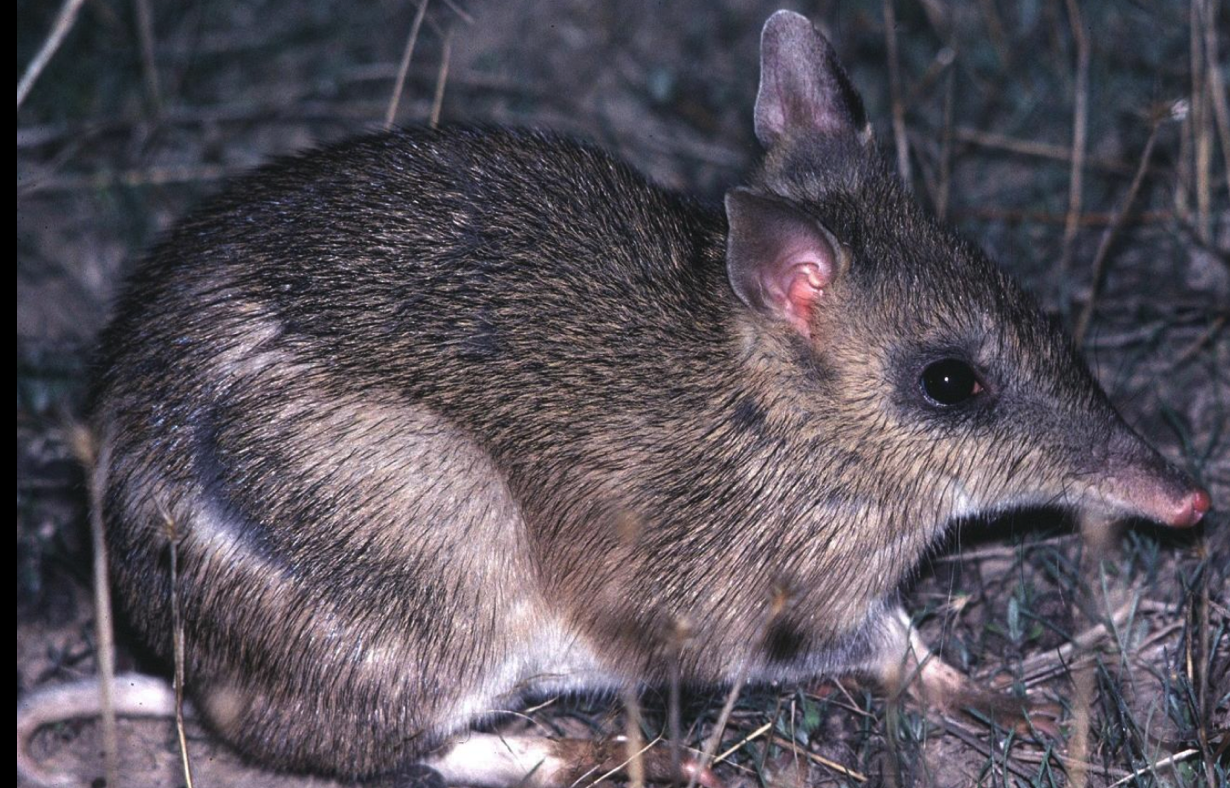
Bandicoots, he said, “forage at night for invertebrates - earthworms, crickets, caterpillars, beetles and grubs and also eat some plant material, including the bulbs of grasses".
Bandicoots build ‘nests’ about 30 cm long and 10 cm wide just under the surface of the ground,
invariably under fallen branches or tussocks in a well drained spot that is not subject to being trodden on. The nest is lined with grass and the thin roof is made of grass and soil. There are no obvious openings.
The Hamilton Community Parklands, Mooramong, Werribee Open Range Zoo, Woodlands, Mt
Rothwell, Melbourne Zoo, Serendip Sanctuary and French Island are involved in a breeding program.
They take animals from the wild, breed them and then return them to predator-free places. They must avoid in-breeding, with very low numbers of wild populations, and low numbers in them.
In 2014, Dr John Read said: “Animals seen now outside the Parkland’s 100 ha Bandicoot Enclosure have escaped through the netting when young.” They have survived!
but both animals make holes!
As we all know, rabbits make deep networks of holes to house extended families.
Bandicoots are prodigious diggers too but different! Bandicoot holes are small and shallow - just deep enough for them to find the insects and fungi they eat. The holes aerate the soil, might look a little untidy but are not big enough to cause a problem to other animals or erosion.
It is estimated each bandicoot can process an amazing 3.9 tonnes of soil per year.
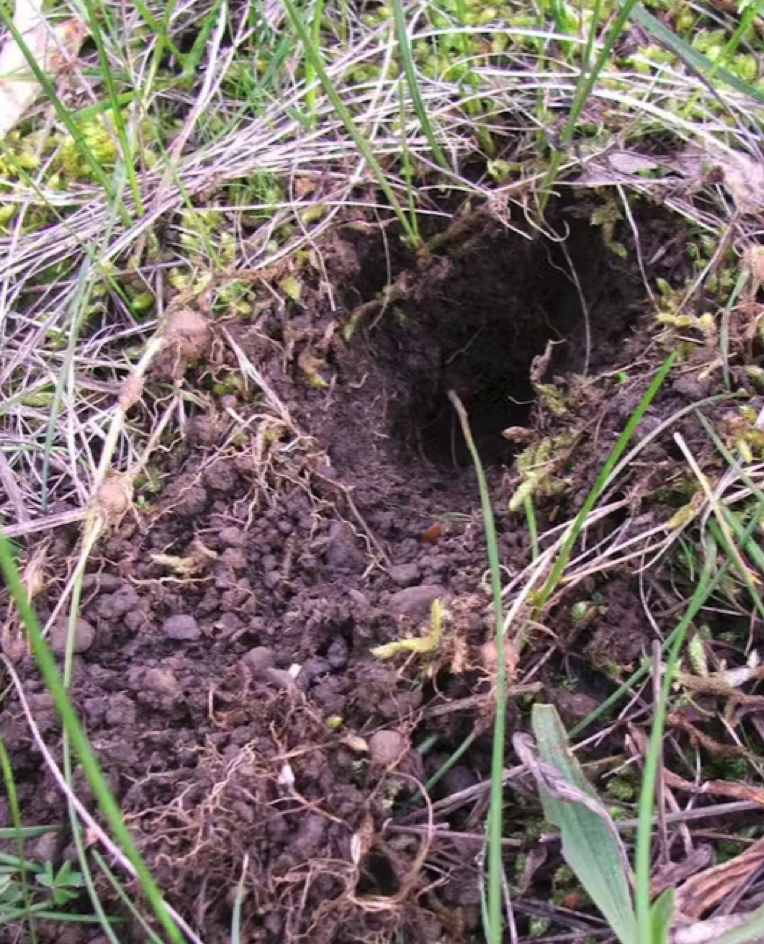
Bandicoot diggings:
* Conical or funnel-shaped, tapering to a narrow point.
* Small, roughly the width of the animal's nose.
* Common in garden mulch, lawns, and under shrubs.
* Often found in groups or "scoops" rather than a single hole.
* A fresh pile of moist soil indicates a recent hole (last night), while older holes may contain leaves, insects, or appear weathered.
These diggings help aerate the soil and reduce fire risk by breaking up leaf litter.
We can learn more about bandicoots from
the Foundation for National Parks and Wildlife - Backyard buddies
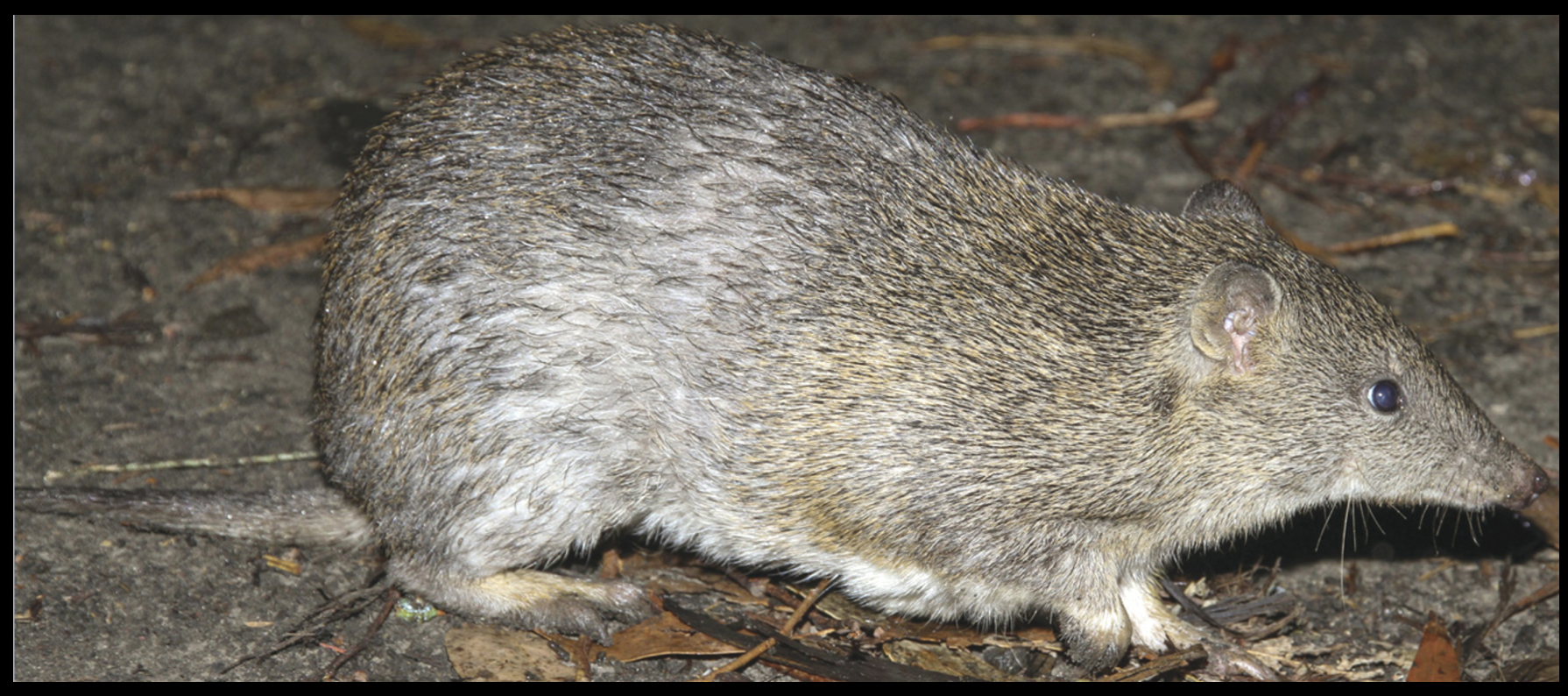
See https://backyardbuddies.org.au/backyard-buddies/bandicoot/
it is rewarding to follow Prof Euan Ritchie - t it’s his work his timewith Sarah Maclagan reported in 2018. They started with the obvious:
“There are more and more of us on Earth, and increasingly we’re choosing to live in cities. This is a problem for wildlife: urbanisation is one of the greatest threats to biodiversity. Sprawling construction to accommodate people completely removes or modifies the homes of many other species.”
To their surprise, they discovered:
“although we need to do all we can to mitigate these effects and their causes, cities are far from biodiversity wastelands. In fact, cities are home to large numbers of species, many of which are threatened.
Their example was the iconic but endangered southern brown bandicoot.
They said “Animals are dealing with “new combinations of species and/or new and modified environmental conditions”“ The question was, “could peri-urban areas allow bandicoots to breed, recruit (attract new migrating individuals) and survive well enough for populations to persist?”
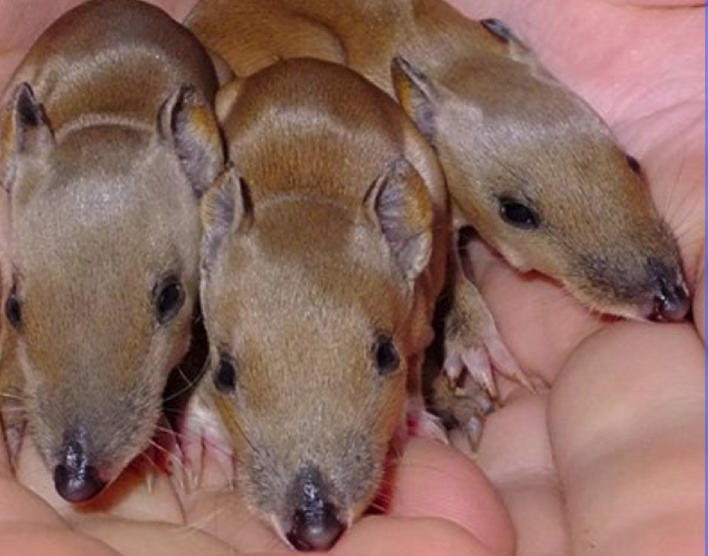
They investigated some urban sites and found:
“Most bandicoots at novel sites were resident (meaning they were observed at the same location multiple times though out the study). At these same sites, [they] recorded successful breeding, recruitment of young adults, and survival of mature adults.
They concluded:
“Our results challenge conventional conservation thinking. Where bandicoots did best is also where known predators such as foxes and feral cats are present and abundant, as opposed to the nature reserves from which they are largely absent. Remnant areas also have more intact native vegetation, whereas bandicoots in urban areas nested in roadsides full of invasive blackberry, a weed often targeted for removal.”
“A growing body of evidence suggests that even heavily modified environments can support viable populations of native plants and animals, and we should endeavour to manage these areas more sympathetically for the benefit of more species. This does not mean that all species will thrive in cities and heavily modified environments – there will always be a need for conservation reserves – but it throws the wilderness-versus-city dichotomy into question.”
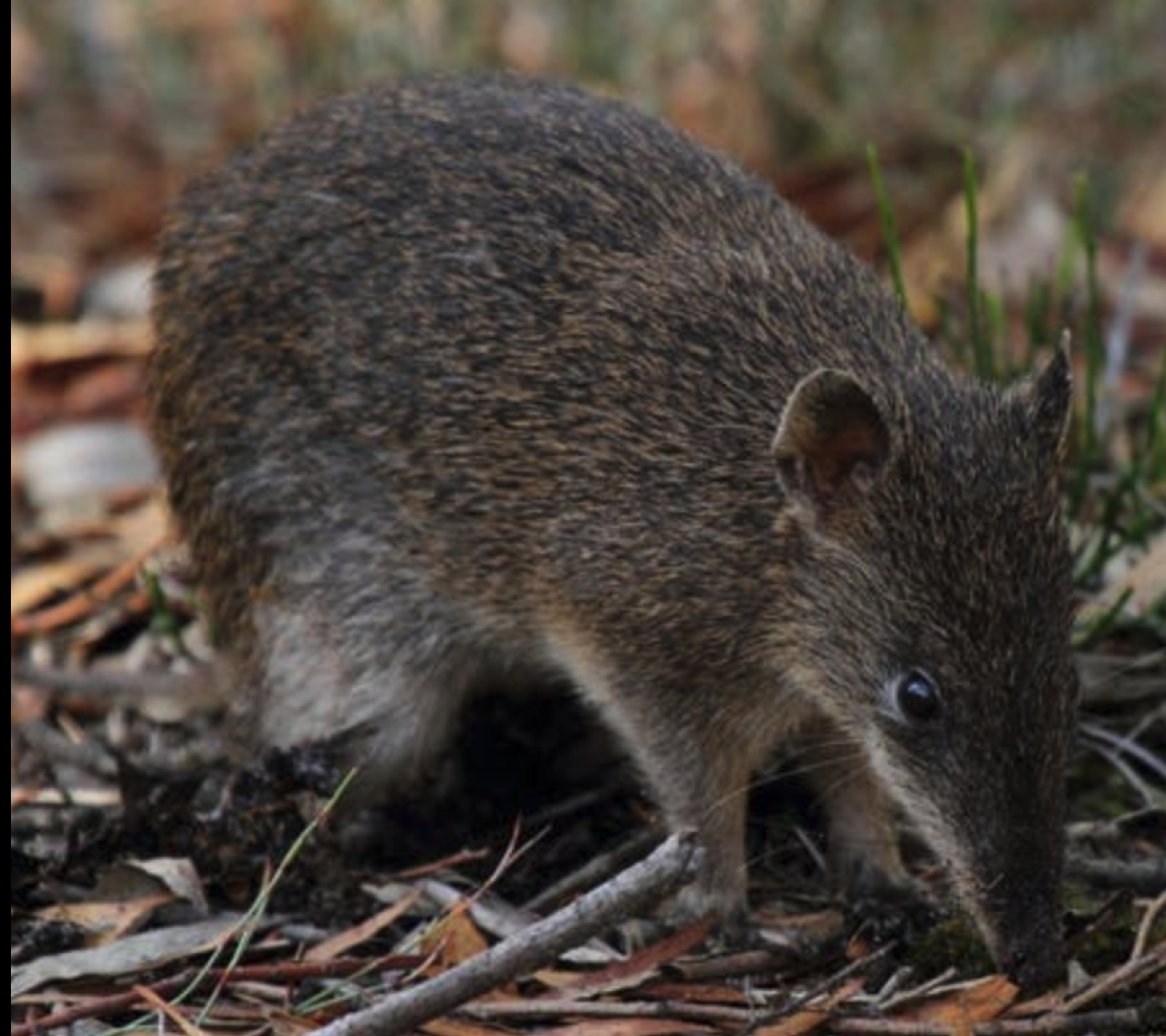
Another article is at https://theconversation.com/rockin-the-suburbs-bandicoots-live-among-us-in-melbourne-95423
In a local project, Dr Barbara Wilson’s company showed that between 2010 and 2020 there was a significant decline in the threatened mammal populations in our region.
Then there was a $6m project for 3 years (2020-2023).
That project showed remarkable results on-camera from Coalmine Creek identifying species such as swamp antichinus, southern brown bandicoots and long-nosed bandicoots, according to Dr Mark Garkaklis.
He said:
“Despite the benefits of having these native species find refuge in these coastal dunes, further surveys have shown that introduced foxes and cats are now using and breeding in these dunes and gullies.”
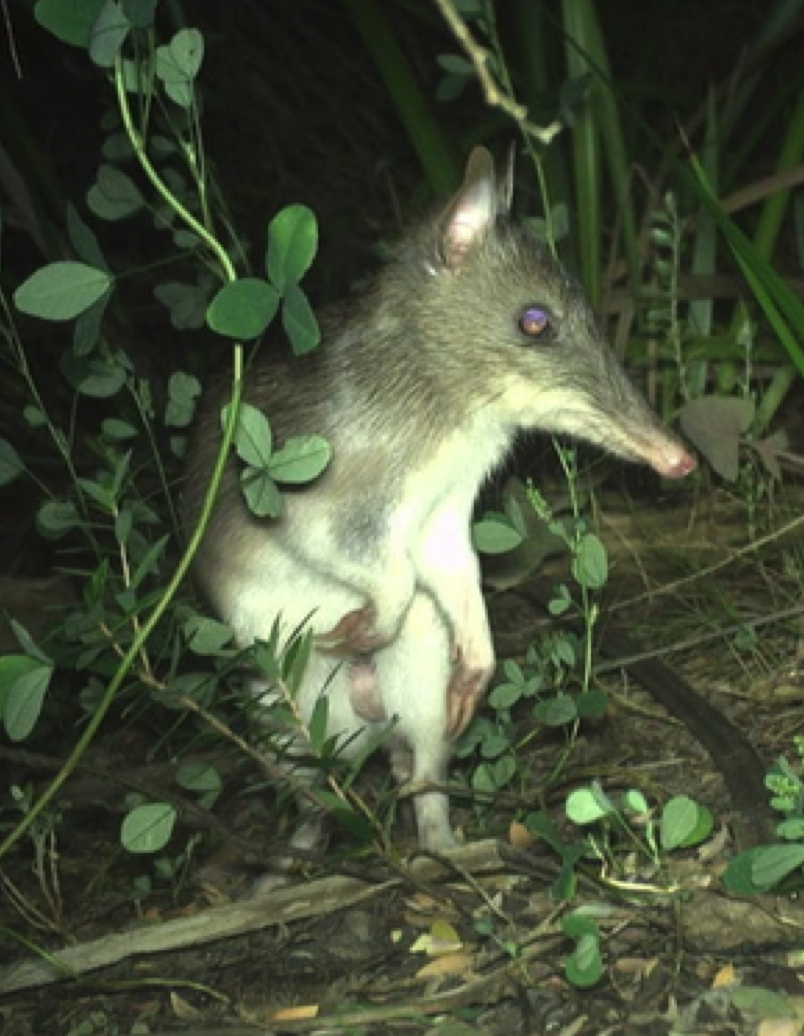
Dr Mark Garkaklis says, “This is a huge problem. They will kill bandicoots and other natives in time. Controlling the cats and foxes will be challenging.”
but on a positive note,
“An immediate solution is protecting existing habitat. The very thick and dense vegetation of the dune provides habitat for native species, which helps protect them from predators. In addition, by managing weeds and helping people understand the importance of coastal vegetation, we help protect the animals that live in the dunes from being killed.”
We ask, could the vegetation of the dunes form the necessary safe habitat?
See https://ccma.vic.gov.au/biodiversity/endangered-long-nosed-bandicoot-at-Eastern-view/
At the time, The Dunecare Stewardship program targeted year 9 and 10 students in the region and built on student and local community stewardship for local dune conservation and flora and fauna conservation.
See https://ccma.vic.gov.au/biodiversity/endangered-long-nosed-bandicoot-at-Eastern-view/
Back to our Rabbit Sweep mission.
If we continue with this array of tools, will we reduce the overall population of rabbits?
Perhaps we should ask:
If the same ‘we’ continue with this ‘same’ array of tools, will we reduce the overall population of rabbits? or are the rabbits winning?
In the past, we have had a radical tool about every decade - a new virus - but is there work on-going to produce the overdue virus?
Can we overcome all that is working against us:
- convenient time of year vs rabbit activity
- inertia and earned frustration
- lack of coordinated effort
- failure to use techniques effectively
- limits of resources, ‘qualifications’, cost etc
- finding a convenient contractor (trust-worthy, reasonably-priced, accomplished)
- lack of motivating catalysts (‘virtue’, economic gain, shame, …)
Can we look forward to a gene drive?
eg, if there was a way of making all newborn rabbits male, would we do it?
The Thylation Foundation’s (https://thylation.com/) John Read says “The need to think outside the square to achieve conservation outcomes for Australian wildlife is real.” and they have tested the clever ‘Felixer’ for controlling cats. This involves a gentle trap that attracts cats, photo identifies them, paints them with poison, and frees them to clean themselves. They die very quickly.
Perhaps the strongest drive is the one caused by social motivation in this era of social media? We believe offering a good alternative to rabbits is critical and we hope we have started such a move on the Bellarine.
Finally, please enjoy this video of a bandicoot breakfast:
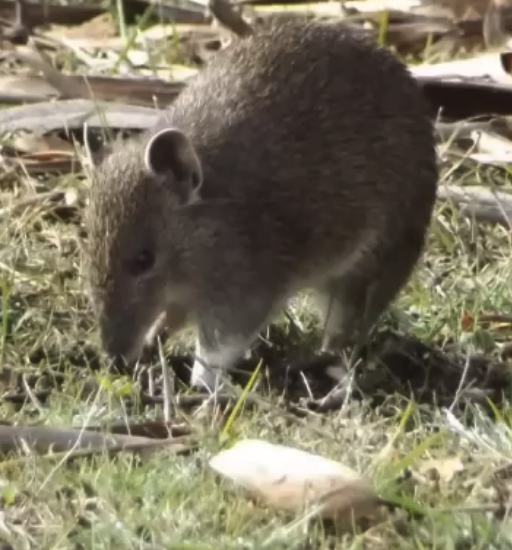
https://www.youtube.com/embed/kYmdxv0hOxk