The Treasure Hunt and Pageant
This event was held in the Point Richard's Nature Reserve at Portarlington, Victoria, in July 2026. More than 50 people participated. It was made possible by a grant from the City of Greater Geelong.
See about CoGG grants (note especially the participant's assessment of the event)
Contents
- What did a participant do?
- Audio from the Pageant
- What had to be done to make the event happen?
- The story of the event
What did a participant do?
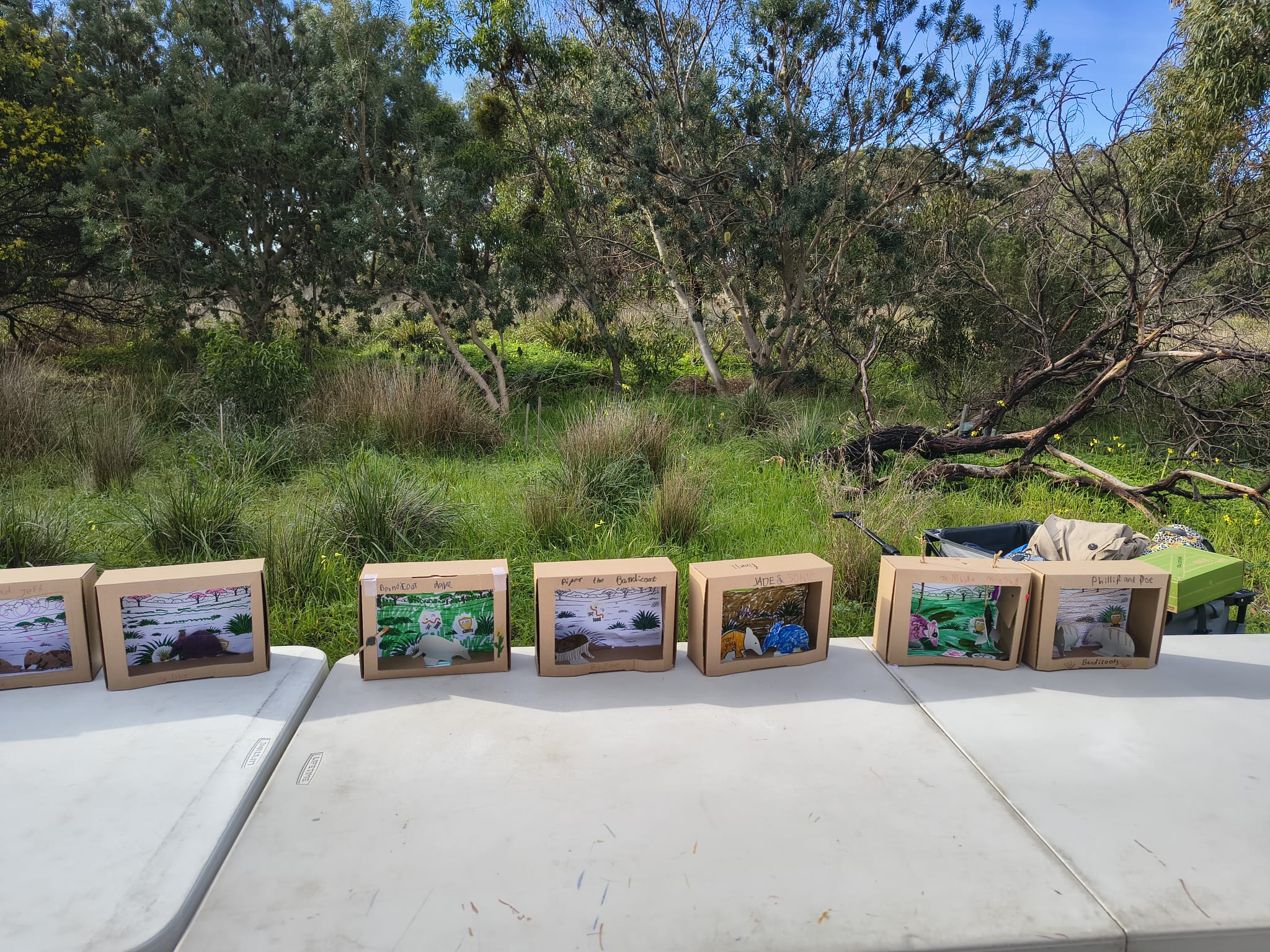
As a participant, one came to the Reserve, received a guide booklet, and followed one of the paths around the Reserve, gathering treasure as they went. There were 10 stations at which something was offered and a participant could return to the beginning to assemble a take-home diarama.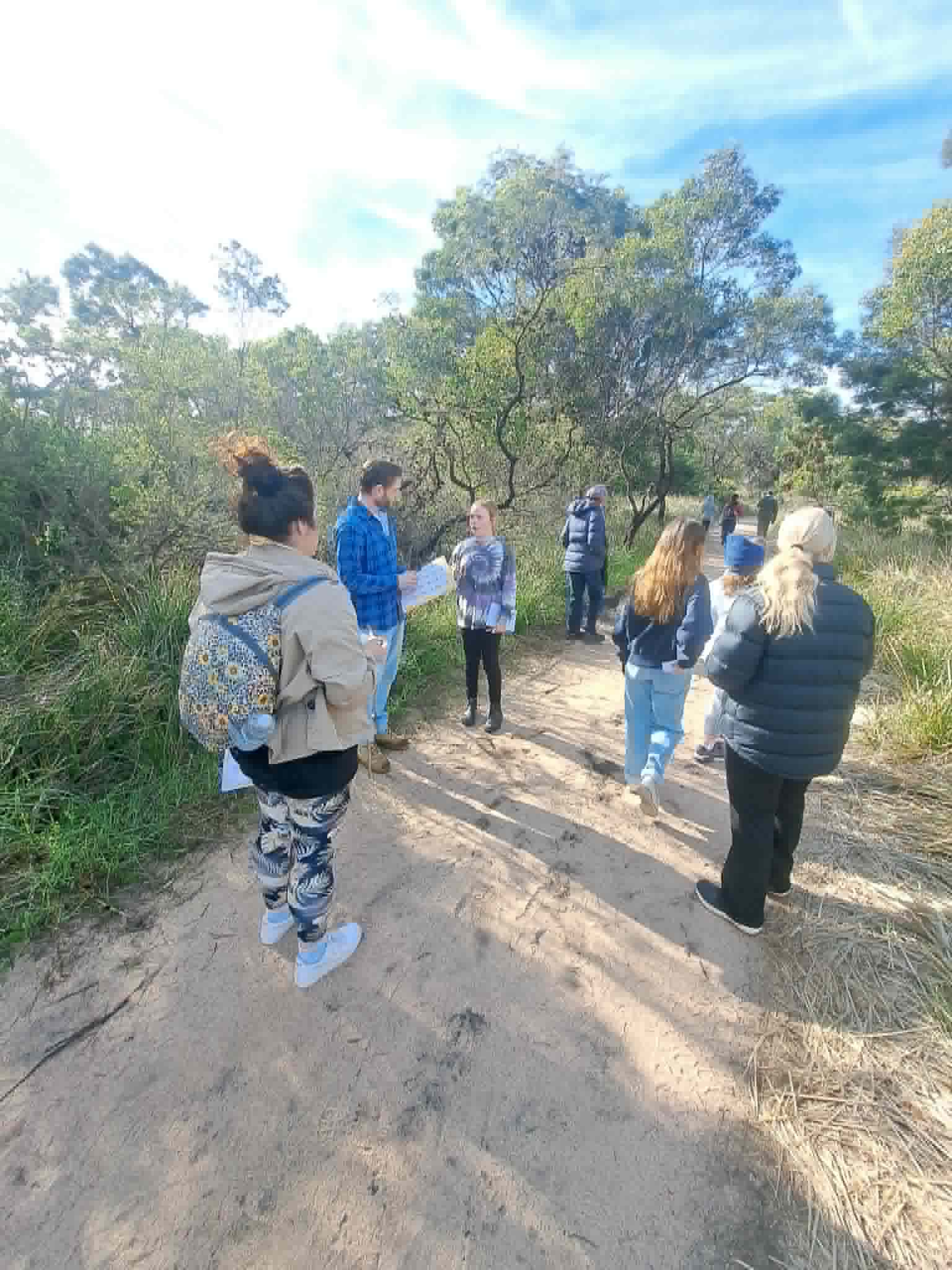
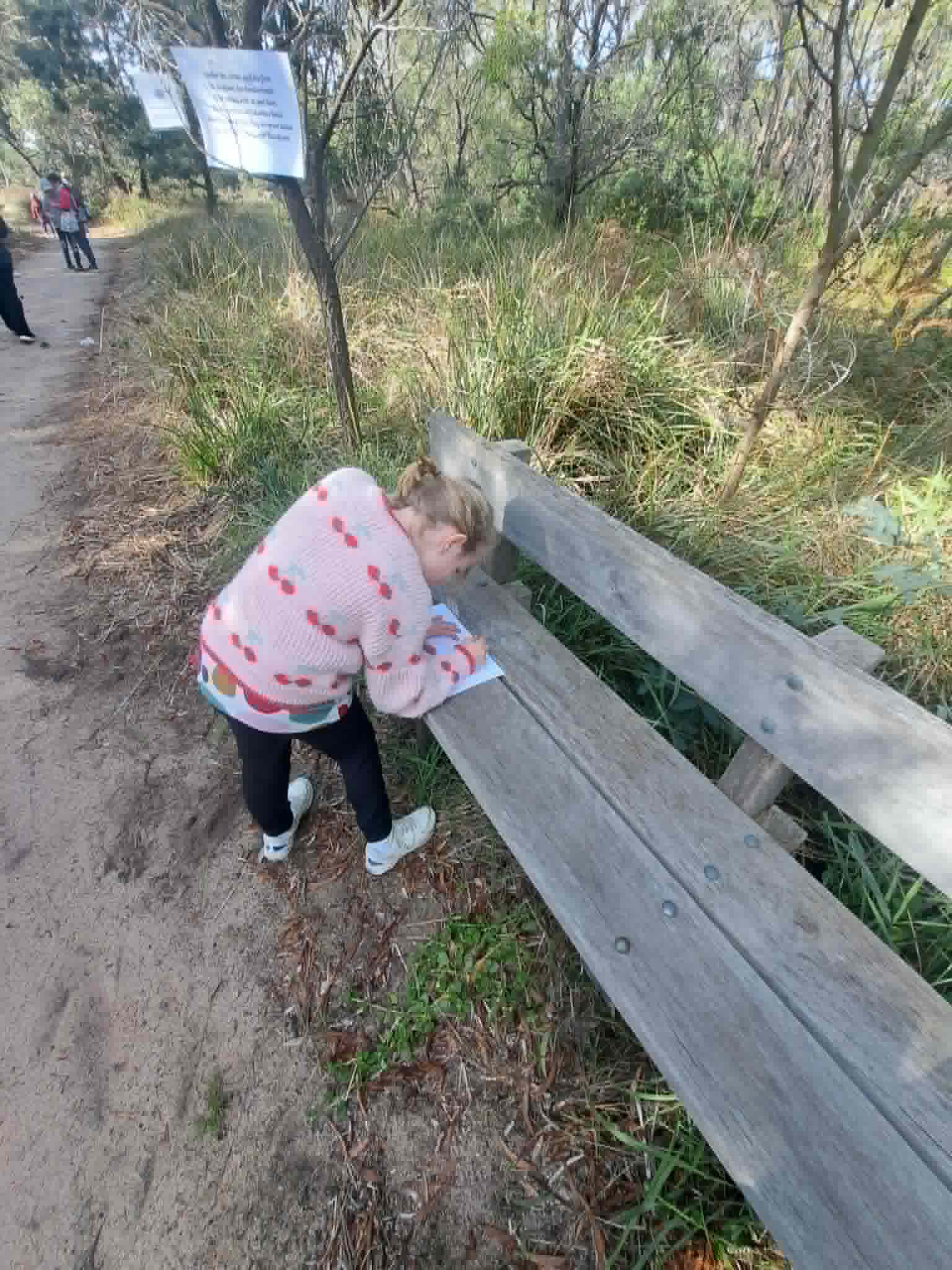
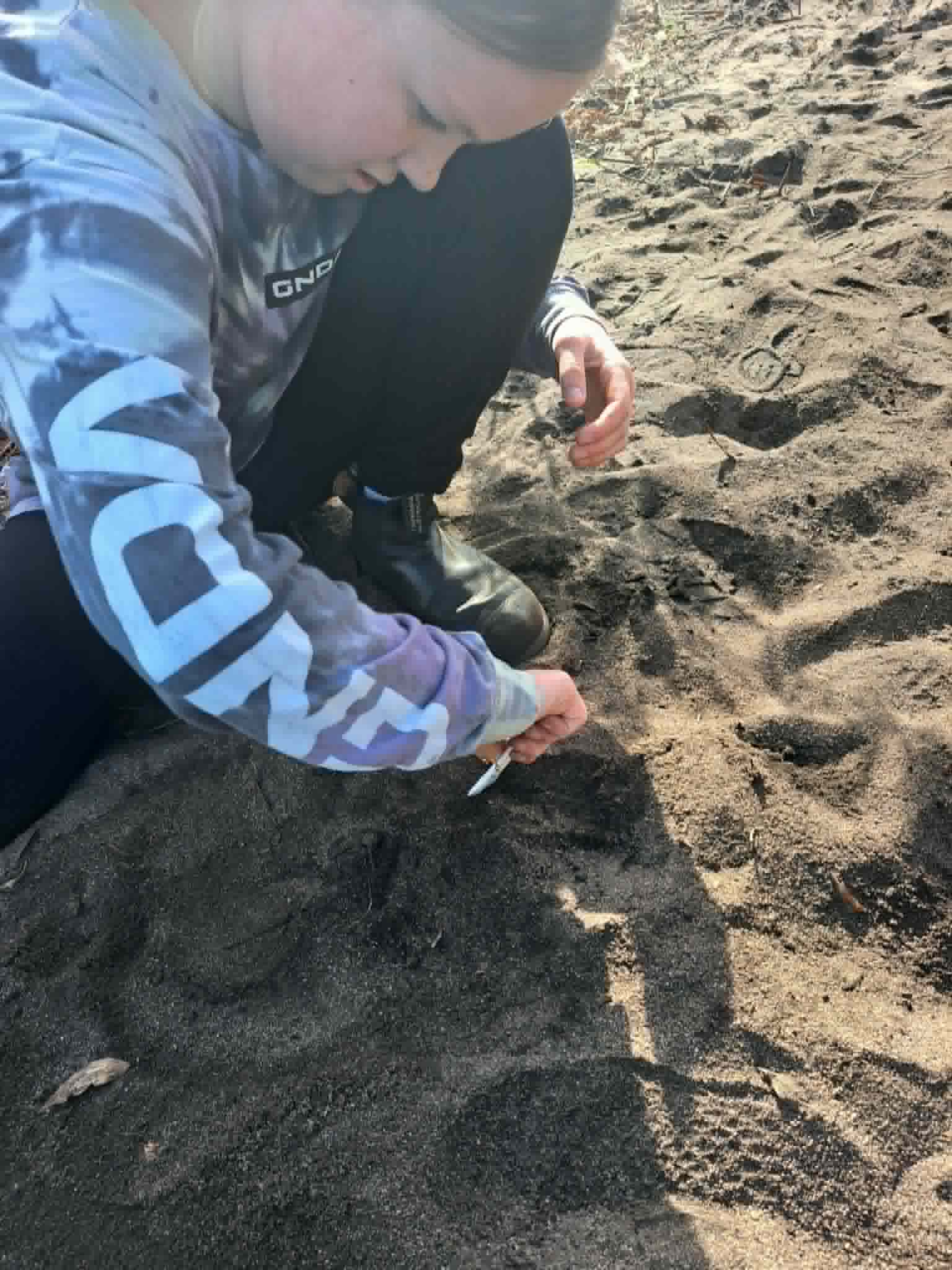
4 stations drew attention to Banjo Patterson's work in newly colonised Australia. One had a focus on predators, lurking in the trees in the form of black silouettes of cats. foxes. rabbits. etc. One had a focus on habitat and there was a drawing to be coloured in that become the backdrop of the diarama. One had a small pile of sand in which participants could find clay worms as future food for an indigenus animal. One focussed on the encroaching estate development threatening the peace of indigenous animals. Et cetera.
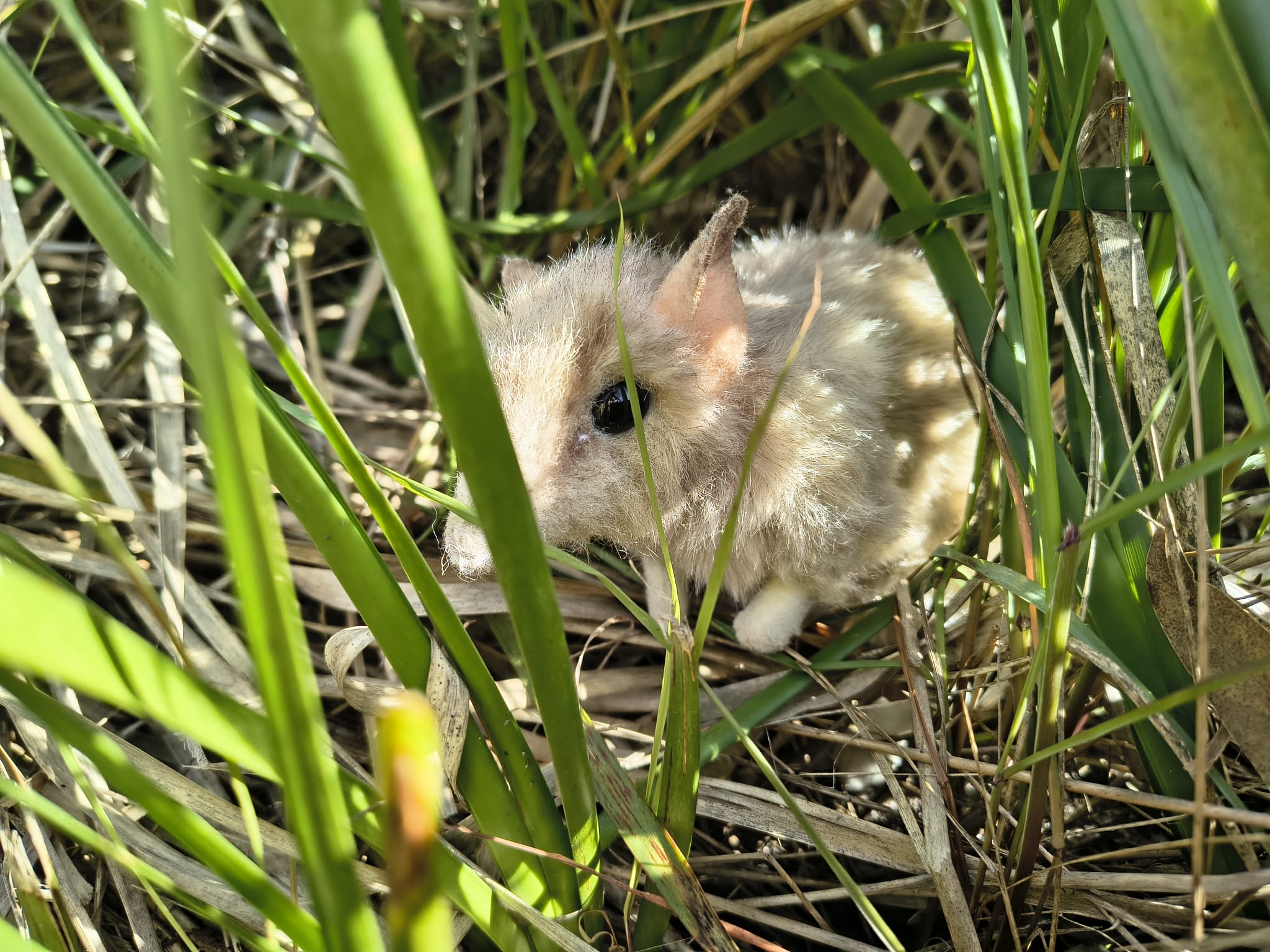
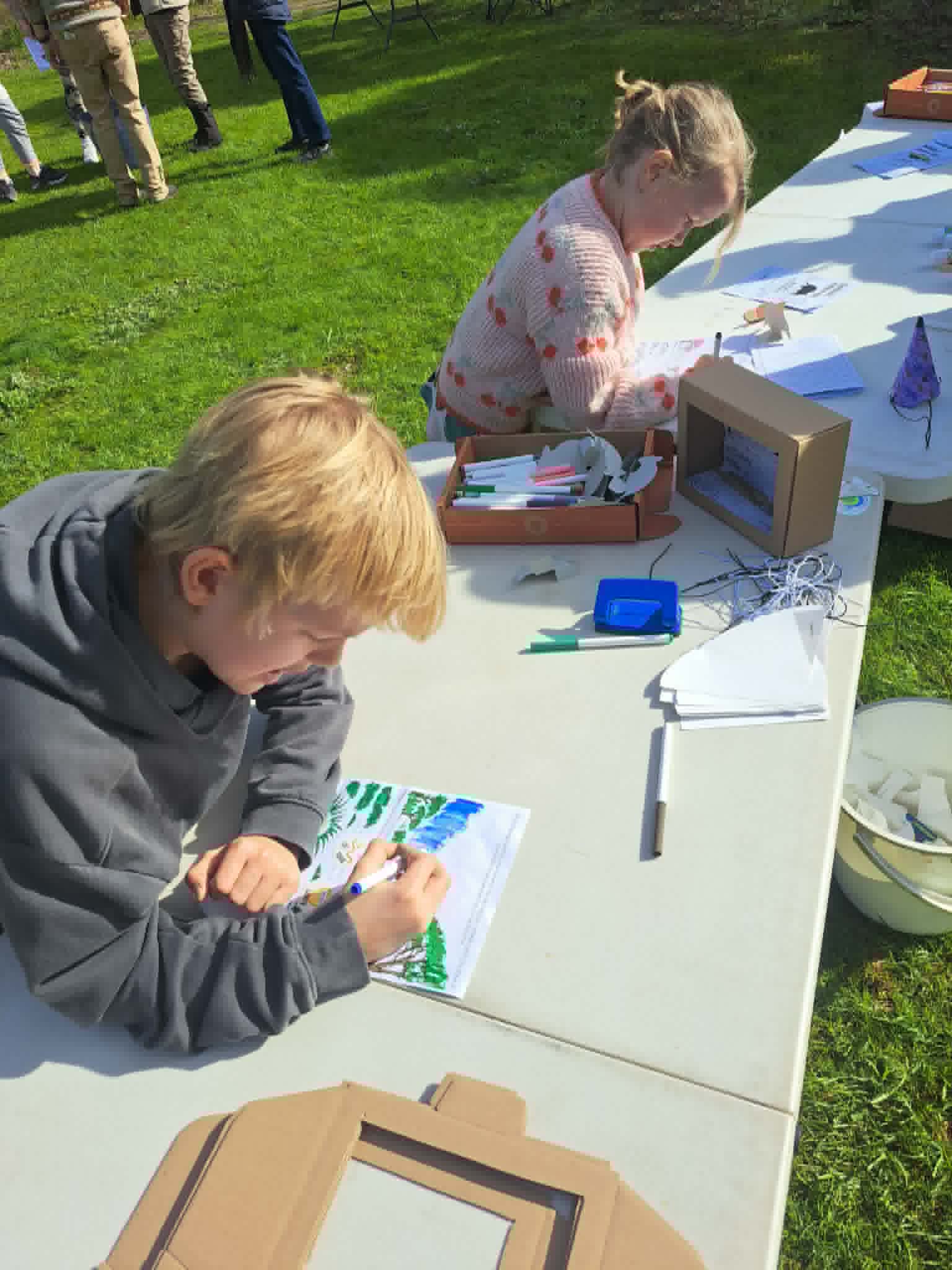
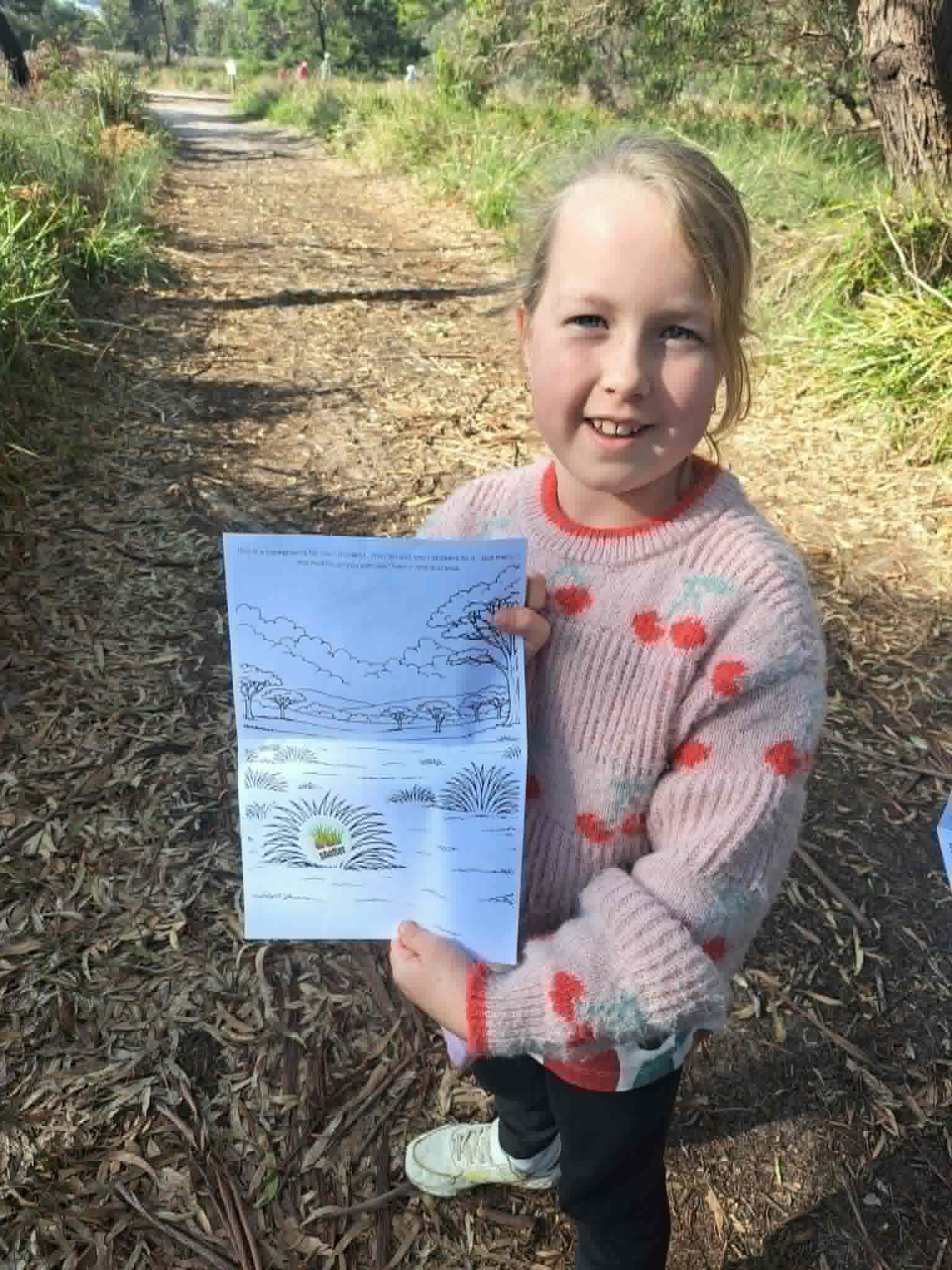
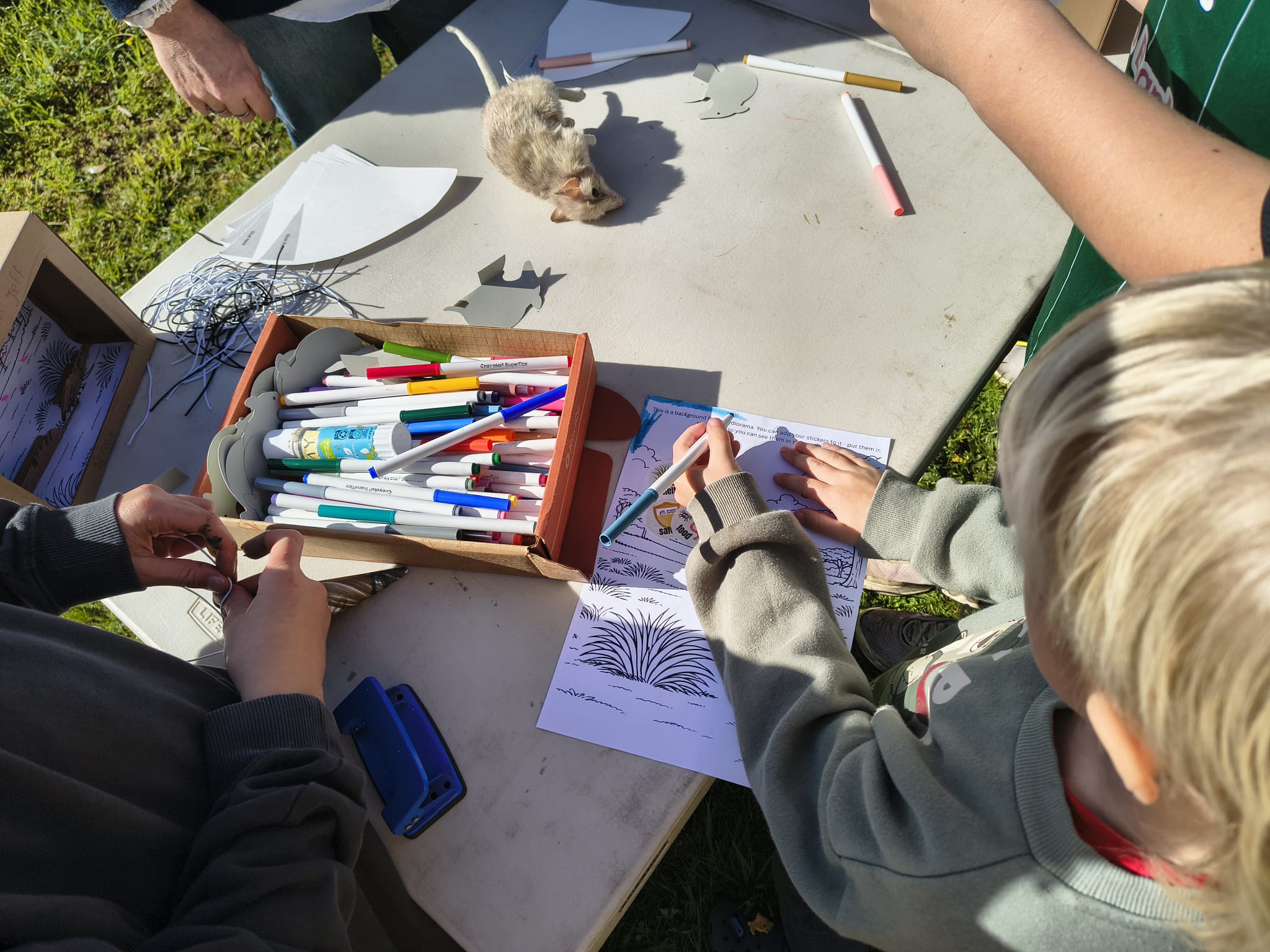
The Pageant consisted of humerous but factual dialogue read by participants holding beautiful masks of local indigenous animals. The spirit of the bush led the young actors and the performance was watched in silence (except for some laughs) in front of more than 50 people.
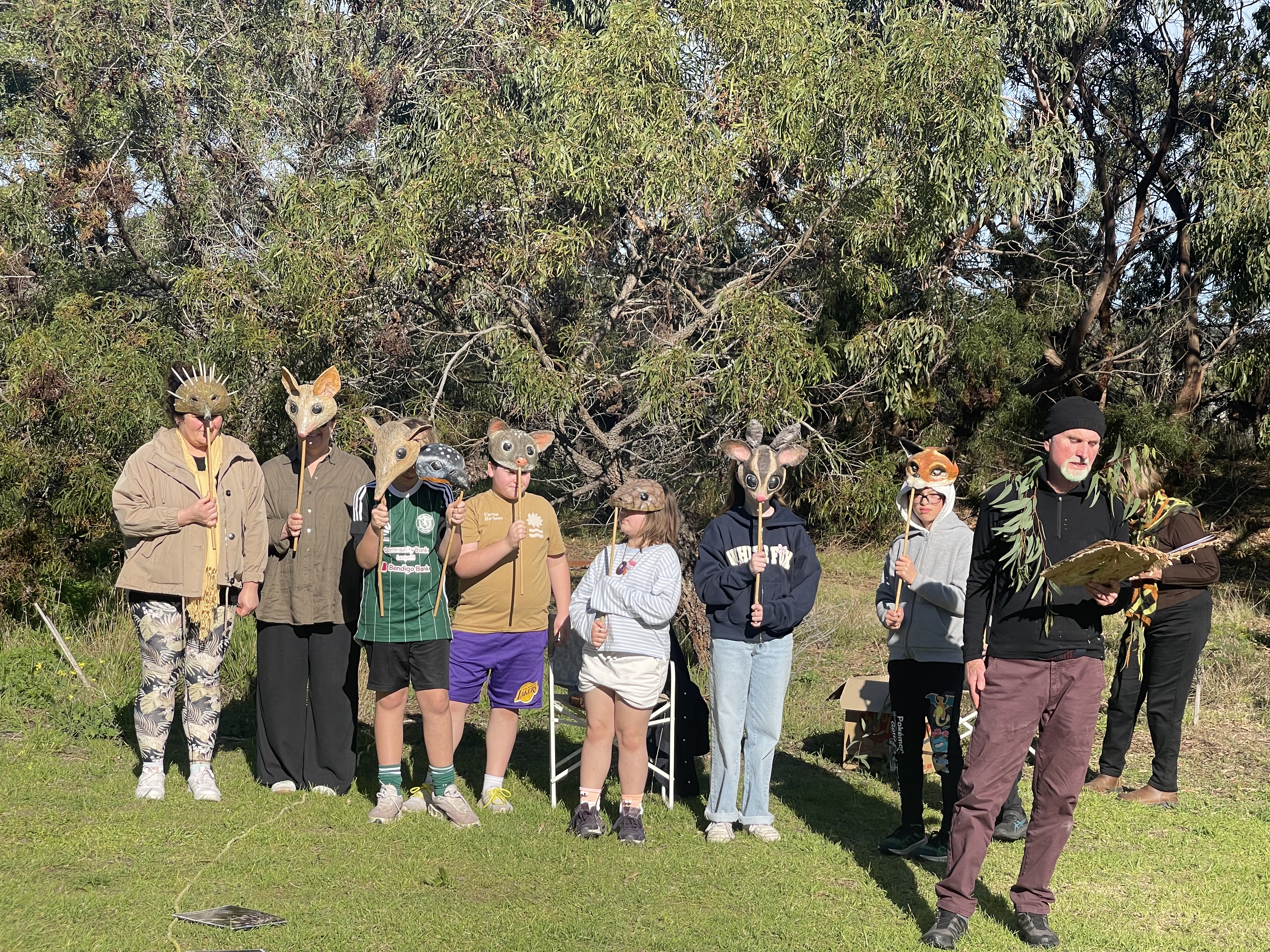
Audio from the Pageant
The Spirit of the Bush and some indigenous animals:
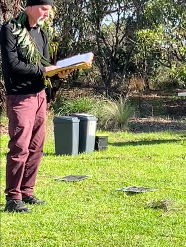
All videos are- coming soon!
What had to be done to make the event happen?
The following were done, and some of the results are recommended for re-use.
- A venue was chosen, tested, and negotiated with the local 'friends of' group. (In our case two different venues were considered.)
- A date was chosen that did not clash with other local events.
- A focus for the treasure hunt was developed. (In our case the absence of indigenous animals and the presence of invasive feral animals and human developments.)
- 10 ideas were selected including such as habitat, threats, etc.
- A treasure was defined. (In our case a take-home diarama with a cute indigenous animal and some food in a colourfull background.)
- To attract participants, almost all primary schools on the Bellarine received and sent on to parents, a notice of invitation.
- Registration in advance was available and those who registered were sent update/reminder notices a few days before the event.
- Boxes with windows, a suitable printed scenario ready for colouring in and insertion in the box, poetry sections, 'worm'-infested sand, profiles of invasive pests like cats, etc, were all made by the team. (Note: care was taken to make sure what was brought into the reserve left with the participants.)
- Trail notices, routes, maps, signs, etc were all considered, prepared and laminated.
- The venue's suitability was re-assessed and checked. (In our case it was considered essential that there was a convenient toilet for families and CoGG offered to pay for this.)
- Safety is always critical so working with children checks, first aid supplies and expertise, etc., were managed. All participants were registered.
- A sausage sizzle was added to the event as it supported a second event after lunch. (Simply sausages, with sauces, in bread slices, made all the difference. Participsnts had been asked to bring more picnic but most didn't!)
- The second event was offered by a couple of Landcare volunteers and involved participants taking a role in a pageant, wearing beautiful masks representing indigenous animals, and performed for everyone after lunch. (It was a great success among older children who took a role and even among young children who probably woud not have understood the script but enjoyed the spectacle.)
The story of the event
So this is a draft we have worked on, kind of a story about the whole, rather than process, let me know what you what to be different or included and we can do that.
The Story Behind the Bandicoot Treasure Hunt
Every conservation project faces the same challenge: how do you help a community care about something that is often unseen?
Our project began with a clear purpose—to build community understanding of why rabbit control is essential for restoring and protecting the Bellarine's natural environment. Rabbit control is not simply about reducing pest numbers; it is about giving Country the opportunity to recover. Healthy landscapes support healthy ecosystems, creating habitat for native plants and animals, strengthening biodiversity and creating places where wildlife can thrive.
Very early in the design process we recognised another challenge.
Rabbit control can be a difficult conversation, particularly with children and families. Rabbits are familiar, appealing animals, and discussions about controlling them can quickly become focused on the idea of killing animals rather than on the environmental outcomes that rabbit control makes possible. We realised that if this became the starting point of the experience, it risked overshadowing the much bigger story we wanted to tell.
So we reframed the question.
Instead of asking "How do we explain rabbit control?" we began asking "How do we help people understand what rabbit control makes possible?"
That simple shift changed the direction of the entire project.
Rather than making rabbits the centre of the story, we chose to introduce families to one of the Bellarine's most remarkable native residents—the Southern Brown Bandicoot. The bandicoot became our storyteller. Through its eyes, children could discover what makes a healthy habitat, what threatens it, and why restoring landscapes sometimes requires difficult but important conservation actions.
We also recognised something important about how communities learn.
Although the conservation message was ultimately aimed at the whole community, children could become the catalyst for those conversations. Families choose activities because they appeal to children. Children ask questions, notice details and share what they discover with parents, grandparents and carers. Rather than trying to persuade adults through information alone, we wanted to create an experience where children would lead the exploration and families would learn together.
Instead of beginning with rabbit control, we began with connection—to place, to nature and to the remarkable wildlife that depends on healthy habitats.
Our original intention was to deliver the experience in a different reserve. As planning progressed, however, practical issues such as parking, safe access for families and the suitability of the site led us to relocate the event to Point Richards Nature Reserve.
At the time, this felt like an unexpected challenge. Looking back, it became one of the project's most valuable lessons.
Moving to a new reserve meant redesigning almost every aspect of the experience. We walked the site, explored its features, reconsidered the sequence of activities and searched for places where children could genuinely discover something rather than simply read information. We looked for opportunities where the landscape itself could tell the story.
In doing so, we realised that the project wasn't really about one reserve. It was about a way of designing experiences that could be adapted to different places while still achieving the same conservation outcomes.
That insight shaped the rest of the project.
From the beginning, we wanted children to become active participants rather than passive learners. Instead of attending an environmental education session, families would become explorers together. They would search for clues, investigate habitat, dig for the kinds of food bandicoots rely on, look for evidence of predators and pests, and gradually piece together the story of what makes a healthy environment.
The reserve itself became the classroom.
One of the most significant design decisions came when we asked ourselves what the "treasure" should be.
We realised we didn't want children to finish the trail by receiving a prize.
We wanted them to create the treasure themselves.
This led to the development of the bandicoot habitat diorama, which became the heart of the experience.
Every activity along the trail was designed to contribute to that final creation. Rather than collecting lollies or plastic toys, children collected understanding. They discovered what bandicoots eat, where they shelter, how native plants create habitat and how rabbit damage affects the landscape. At the end of the trail they brought these discoveries together by creating their own miniature bandicoot habitat.
The diorama became much more than a craft activity. It transformed learning into making. Every challenge on the trail had a purpose because every challenge contributed another piece of the habitat they were building. Instead of taking home a novelty prize, children took home something they had imagined and created themselves—a reminder of the environment they had learned to value.
The decision to use natural and recycled materials reflected another important principle. We wanted the activity itself to model environmental responsibility while remaining affordable and achievable for community groups to reproduce using readily available materials.
As the design evolved, we intentionally created opportunities for different kinds of learners. The experience combined movement, observation, storytelling, problem solving, imaginative play, creative making and performance. Families searched for clues, completed field books, dug for worms, explored the reserve, built habitats and finally celebrated together through a community pageant and shared picnic.
By the time the event was delivered, it had become much more than a treasure hunt.
It was a carefully designed learning journey that encouraged children to explore, observe, create and imagine while helping families understand that rabbit control is not an end in itself. It is one of the practical actions communities can take to restore healthy Country, rebuild habitat and create places where native plants and animals can thrive.
The response from participating families suggested this approach had achieved what we had hoped. Parents described the event as "an adventure rather than a lesson." Children spoke enthusiastically about discovering parts of Point Richards Nature Reserve they had never explored despite living locally, digging for worms, completing the trail and taking part in the pageant. Parents commented that the combination of outdoor exploration, creativity and storytelling appealed to different learning styles and created lasting family memories while building a genuine appreciation for the reserve and its wildlife.
Perhaps the most significant outcome was that children became ambassadors for conservation. Their curiosity and enthusiasm continued long after the event, prompting conversations within families about habitat, native species and why rabbit control is an important part of restoring local environments. By helping children connect emotionally with the landscape first, we found it became much easier for adults to engage with the broader conservation message.
The project also revealed how much work sits behind creating this kind of experience. Designing activities, adapting them to a particular landscape, producing resources, preparing materials, coordinating volunteers and delivering the event required a significant investment of time and creative effort. While this was entirely appropriate for a pilot project, it highlighted a challenge for Friends groups, Landcare organisations and volunteer-led conservation groups that may have the passion to engage their communities but not the capacity to design and deliver such an experience from scratch.
Looking back, we realised that the Bandicoot Treasure Hunt was never simply an event.
It was a prototype.
Along the way we tested ideas, adapted them to a new reserve, discovered what engaged families most effectively, and identified the elements that could be standardised and reused. We developed a repeatable approach that helps communities understand rabbit control by first helping them care about the landscapes and habitats that rabbit control protects.
The next stage is to capture those lessons in a practical Nature Play Toolkit—reducing the design and delivery burden for community groups while enabling many more communities to build understanding and support for rabbit control through meaningful, place-based experiences.
The innovation wasn't the treasure hunt. It was discovering a better way to have the conversation about rabbit control.